Manual transmissions, also known as stick shifts, offer a unique driving experience. They provide greater control and engagement with the vehicle. Many enthusiasts prefer them. This article explores some of the best cars from 2017 that still offered this engaging option. It’s a dying breed, but still worth celebrating!
Top Picks for 2017
Here are a few standout models from 2017 that offered a manual transmission. These cars were chosen for their performance, reliability, and overall driving experience; They represent a good mix of affordability and fun.
- Honda Civic Si: A sporty and reliable choice.
- Mazda MX-5 Miata: The quintessential roadster.
- Subaru WRX: All-wheel drive performance.
These cars provided a great driving experience. They were also relatively affordable. Consider checking them out if you’re looking for a used manual car.
Tip: When buying a used car with a manual transmission, always check the clutch for wear and tear. A worn clutch can be expensive to replace!
Performance and Handling
Manual transmissions allow for precise control over the engine’s power. This can lead to improved acceleration and responsiveness. The driver has the ability to select the optimal gear for any given situation. This is especially useful on winding roads or during spirited driving.
Interesting Fact: Some studies suggest that driving a manual transmission can improve cognitive function and reaction time.
FAQ: Manual Transmissions
What are the benefits of a manual transmission?
Manual transmissions offer greater control, a more engaging driving experience, and often better fuel economy (though this is becoming less common with modern automatics). They can also be more affordable to maintain in some cases.
Are manual transmissions harder to learn?
Yes, learning to drive a manual transmission requires more coordination and practice than driving an automatic. However, many drivers find the added control and engagement worth the effort. It’s a skill that can be learned with patience.
Are manual transmissions becoming obsolete?
Unfortunately, yes. The demand for manual transmissions has been steadily declining. Many manufacturers are phasing them out in favor of more efficient and convenient automatic transmissions. However, there’s still a dedicated following that keeps the manual alive.
Manual transmissions, also known as stick shifts, offer a unique driving experience. They provide greater control and engagement with the vehicle. Many enthusiasts prefer them. This article explores some of the best cars from 2017 that still offered this engaging option. It’s a dying breed, but still worth celebrating!
Here are a few standout models from 2017 that offered a manual transmission. These cars were chosen for their performance, reliability, and overall driving experience. They represent a good mix of affordability and fun.
- Honda Civic Si: A sporty and reliable choice.
- Mazda MX-5 Miata: The quintessential roadster.
- Subaru WRX: All-wheel drive performance.
These cars provided a great driving experience. They were also relatively affordable. Consider checking them out if you’re looking for a used manual car.
Tip: When buying a used car with a manual transmission, always check the clutch for wear and tear. A worn clutch can be expensive to replace!
Manual transmissions allow for precise control over the engine’s power. This can lead to improved acceleration and responsiveness. The driver has the ability to select the optimal gear for any given situation. This is especially useful on winding roads or during spirited driving.
Interesting Fact: Some studies suggest that driving a manual transmission can improve cognitive function and reaction time.
Manual transmissions offer greater control, a more engaging driving experience, and often better fuel economy (though this is becoming less common with modern automatics). They can also be more affordable to maintain in some cases.
Yes, learning to drive a manual transmission requires more coordination and practice than driving an automatic. However, many drivers find the added control and engagement worth the effort. It’s a skill that can be learned with patience.
Unfortunately, yes. The demand for manual transmissions has been steadily declining. Many manufacturers are phasing them out in favor of more efficient and convenient automatic transmissions. However, there’s still a dedicated following that keeps the manual alive.
The Soul of the Machine: Why Manual Still Matters
Beyond the practicalities of control and cost, lies something more profound. The manual transmission connects you to the car in a way that an automatic simply cannot. It’s a conversation, a dance between driver and machine. You feel the engine’s pulse, anticipate its needs, and respond with a flick of the wrist and a tap of the foot. It’s not just driving; it’s piloting.
Think of it like this: an automatic is a pre-programmed robot chef, churning out perfectly consistent meals. A manual is like cooking over an open fire. It requires skill, attention, and a willingness to adapt. The results might not always be perfect, but they’ll be uniquely yours. And sometimes, that’s all that matters.
The Zen of Shifting
There’s a certain meditative quality to mastering the manual transmission. The focus required to coordinate clutch, throttle, and shifter can be incredibly calming. It forces you to be present in the moment, to tune out the distractions of the world and focus solely on the task at hand. It’s a form of active meditation, a way to find peace behind the wheel.
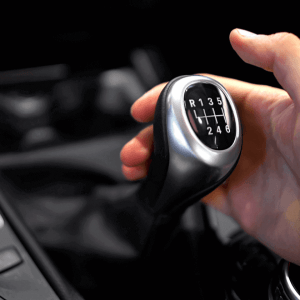
Did you know? The satisfying “click” of a well-engineered manual shifter is often cited as one of the most pleasurable sensory experiences for car enthusiasts. It’s a tactile symphony!
So, while the future may be electric and autonomous, let’s not forget the joy of the manual transmission. It’s a reminder that driving can be more than just transportation; it can be an art form, a connection to the machine, and a path to inner peace. Embrace the stick shift while you still can. The road, and the experience, will be richer for it.
Manual transmissions, also known as stick shifts, offer a unique driving experience. They provide greater control and engagement with the vehicle. Many enthusiasts prefer them. This article explores some of the best cars from 2017 that still offered this engaging option. It’s a dying breed, but still worth celebrating!
Here are a few standout models from 2017 that offered a manual transmission. These cars were chosen for their performance, reliability, and overall driving experience. They represent a good mix of affordability and fun.
- Honda Civic Si: A sporty and reliable choice.
- Mazda MX-5 Miata: The quintessential roadster.
- Subaru WRX: All-wheel drive performance.
These cars provided a great driving experience. They were also relatively affordable. Consider checking them out if you’re looking for a used manual car.
Tip: When buying a used car with a manual transmission, always check the clutch for wear and tear. A worn clutch can be expensive to replace!
Manual transmissions allow for precise control over the engine’s power. This can lead to improved acceleration and responsiveness. The driver has the ability to select the optimal gear for any given situation. This is especially useful on winding roads or during spirited driving.
Interesting Fact: Some studies suggest that driving a manual transmission can improve cognitive function and reaction time.
Manual transmissions offer greater control, a more engaging driving experience, and often better fuel economy (though this is becoming less common with modern automatics). They can also be more affordable to maintain in some cases.
Yes, learning to drive a manual transmission requires more coordination and practice than driving an automatic. However, many drivers find the added control and engagement worth the effort. It’s a skill that can be learned with patience.
Unfortunately, yes. The demand for manual transmissions has been steadily declining. Many manufacturers are phasing them out in favor of more efficient and convenient automatic transmissions. However, there’s still a dedicated following that keeps the manual alive.
Beyond the practicalities of control and cost, lies something more profound. The manual transmission connects you to the car in a way that an automatic simply cannot. It’s a conversation, a dance between driver and machine. You feel the engine’s pulse, anticipate its needs, and respond with a flick of the wrist and a tap of the foot. It’s not just driving; it’s piloting.
Think of it like this: an automatic is a pre-programmed robot chef, churning out perfectly consistent meals. A manual is like cooking over an open fire. It requires skill, attention, and a willingness to adapt. The results might not always be perfect, but they’ll be uniquely yours. And sometimes, that’s all that matters.
There’s a certain meditative quality to mastering the manual transmission. The focus required to coordinate clutch, throttle, and shifter can be incredibly calming. It forces you to be present in the moment, to tune out the distractions of the world and focus solely on the task at hand. It’s a form of active meditation, a way to find peace behind the wheel.
Did you know? The satisfying “click” of a well-engineered manual shifter is often cited as one of the most pleasurable sensory experiences for car enthusiasts. It’s a tactile symphony!
So, while the future may be electric and autonomous, let’s not forget the joy of the manual transmission. It’s a reminder that driving can be more than just transportation; it can be an art form, a connection to the machine, and a path to inner peace. Embrace the stick shift while you still can. The road, and the experience, will be richer for it.
Beyond the Gear Stick: A Manual Transmission Metaphysics
Let’s delve deeper, shall we? Forget the practicalities for a moment. Consider the manual transmission not as a mere mechanical device, but as a portal. A portal to a different state of being. A state where you are not just a passenger, but an active participant in the unfolding drama of the road;
Each shift is a decision, a conscious act of will. You are not simply reacting to the road; you are shaping it. You are sculpting the experience with your hands and feet. The car becomes an extension of your nervous system, a conduit for your intentions. It’s a form of telepathy, a silent conversation between you and the engine.
The Ghost in the Machine
Some say that every manual transmission has a ghost. Not a literal ghost, of course (though who’s to say?). But a lingering essence of every driver who has ever rowed through its gears. A collective memory of countless journeys, etched into the metal and oil. When you grip the shifter, you are not just holding a piece of machinery; you are holding a piece of history.
- Imagine the stories that shifter could tell.
- The races won, the hearts broken, the sunsets chased.
- Each imperfection, each scratch, each worn spot is a testament to a life lived on the road.
Unusual Thought: Perhaps the reason manual transmissions are disappearing is not just due to technological advancement, but because we are losing our connection to the physical world. We are becoming too reliant on automation, too afraid to get our hands dirty. The manual transmission is a reminder that true mastery requires effort, skill, and a willingness to engage with the machine on a deeper level.
So, the next time you see a car with a stick shift, don’t just dismiss it as an outdated relic. See it as a vessel of history, a portal to a different way of being. A reminder that the best journeys are often the ones where you are fully in control, where you are the master of your own destiny. And who knows, maybe you’ll even catch a glimpse of the ghost in the machine.
The Future of the Manual: A Rebellion in the Making?
While the automotive giants may be phasing out the manual, a quiet rebellion is brewing. A grassroots movement of enthusiasts, mechanics, and tinkerers who refuse to let the stick shift die. They are modifying old cars, building new ones, and keeping the flame alive in garages and on racetracks around the world.
They see the manual transmission not as an anachronism, but as a symbol of freedom, individuality, and resistance against the homogenization of the driving experience. They are the guardians of a lost art, the keepers of a sacred flame.
The Underground Shifting Scene
Imagine a world where manual transmissions are not just a niche market, but a counter-cultural phenomenon. Secret shifting societies, underground racing leagues, and clandestine workshops where the art of the stick shift is passed down from generation to generation. A world where the ability to heel-toe downshift is a badge of honor, a sign of belonging to a select few.
Food for Thought: What if the resurgence of vinyl records is a precursor to a similar revival of manual transmissions? A yearning for a more tactile, authentic experience in a world increasingly dominated by digital simulations.
Perhaps the future of the manual is not in the hands of the manufacturers, but in the hands of the enthusiasts. The ones who are willing to fight for it, to keep the spirit alive, to pass on the knowledge to future generations. The ones who understand that driving is not just about getting from point A to point B, but about the journey itself. And that the best journeys are always the ones where you are fully engaged, fully in control, and fully connected to the machine.