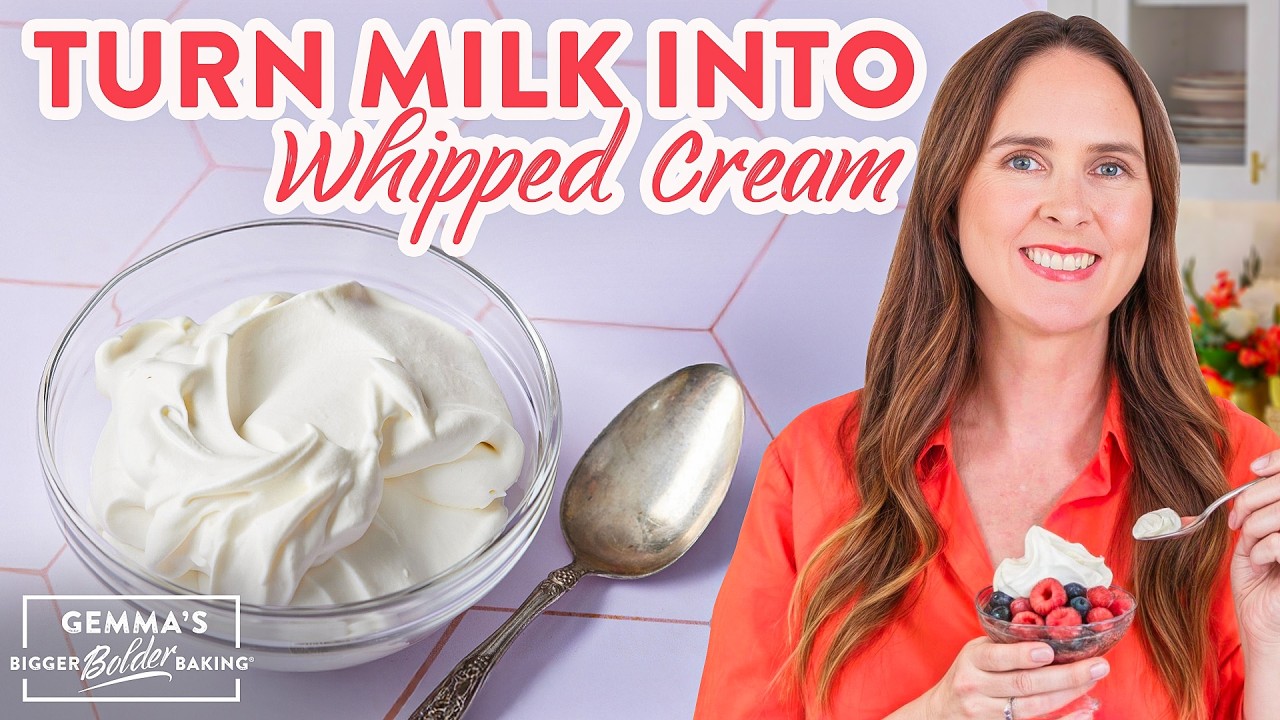
# The Magic of Homemade Whipped Cream: A Culinary Revolution
Ever found yourself in the middle of baking a decadent dessert, only to realize you’re missing a crucial ingredient – whipping cream? Don’t let this culinary crisis halt your kitchen adventures! The good news is that the luscious, airy peaks of whipped cream are achievable even without the store-bought staple. This guide will unlock the secrets to creating this delightful topping using common ingredients, transforming your baking experience and impressing your guests with your resourcefulness.
The quest for homemade whipped cream without the traditional heavy cream is a journey into culinary ingenuity. It challenges the conventional approach and opens doors to creative substitutions that yield surprisingly similar, if not identical, results. From the humble beginnings of milk and butter to more unconventional methods, the possibilities are vast and exciting, promising a delightful outcome that’s both cost-effective and remarkably satisfying.
## Understanding the Science Behind Whipped Cream
Whipped cream, in its traditional form, relies on the high fat content of heavy cream. When cream is agitated, the fat globules collide and bond, trapping air and creating a stable foam. This process is what gives whipped cream its signature lightness and volume. Replicating this requires understanding how to introduce air into a liquid base and stabilize it, much like traditional whipping cream.
### Fat Content is Key
The fat in cream acts as the scaffolding for the air bubbles. Without sufficient fat, the air bubbles collapse, and the cream won’t hold its shape. Therefore, any substitute must either contain a significant amount of fat or have a way to introduce and stabilize air effectively.
### Stabilizers: The Secret Weapon
Stabilizers are crucial for extending the life of homemade whipped cream, preventing it from deflating too quickly. Common stabilizers include cornstarch, gelatin, or even a touch of cream cheese, all of which help to bind the ingredients and maintain the airy structure.
## Delicious Whipping Cream Substitutes
Several readily available ingredients can be transformed into a whipped cream-like topping. Each method offers a unique approach, catering to different dietary needs and pantry staples.
### Method 1: The Milk and Butter Technique
This is perhaps the most popular and accessible method for creating a whipped cream substitute. It relies on the fat content of butter and the liquid from milk to mimic the properties of heavy cream.
**Ingredients:**
* 1 cup (2 sticks) unsalted butter, softened
* 1/2 cup milk (whole milk works best for higher fat content)
* 1/2 cup powdered sugar
* 1 teaspoon vanilla extract
**Instructions:**
1. In a large bowl, beat the softened butter until creamy and smooth.
2. Gradually add the milk, beating continuously until well combined.
3. Add the powdered sugar and vanilla extract. Beat on high speed until the mixture is light, fluffy, and has the consistency of whipped cream. This may take several minutes.
4. If the mixture is too thin, you can add a tablespoon or two of cornstarch and continue beating. If it’s too thick, add a splash more milk.
### Method 2: The Evaporated Milk Marvel
Evaporated milk, when chilled thoroughly, can be whipped into a surprisingly stable and light topping. The key is extreme cold.
**Ingredients:**
* 1 can (12 oz) evaporated milk, thoroughly chilled (at least 24 hours in the refrigerator)
* 1/2 cup powdered sugar
* 1 teaspoon vanilla extract
**Instructions:**
1. Ensure the evaporated milk can, mixing bowl, and beaters are all very cold.
2. Pour the chilled evaporated milk into the cold mixing bowl.
3. Beat on medium speed until the milk begins to thicken.
4. Gradually add the powdered sugar and vanilla extract.
5. Increase the speed to high and beat until stiff peaks form. Be patient, as this can take longer than traditional whipping cream.
Factoid: Evaporated milk is simply milk from which about 60% of the water has been removed. This concentration of milk solids and fats helps it whip up to a thicker consistency.
### Method 3: Silken Tofu Cream
For a vegan and healthier alternative, silken tofu can be blended into a smooth, creamy base.
**Ingredients:**
* 1 package (12 oz) silken tofu, drained very well
* 1/4 cup maple syrup or other liquid sweetener
* 1 teaspoon vanilla extract
**Instructions:**
1. Place the drained silken tofu in a blender or food processor.
2. Add the maple syrup and vanilla extract.
3. Blend until completely smooth and creamy.
4. Chill thoroughly before serving. For a lighter texture, you can attempt to whip this mixture with a hand mixer after chilling, but results may vary.
## Elevating Your Homemade Whipped Cream
Once you have your base whipped cream substitute, you can enhance its flavor and texture with various additions.
* **Flavor Extracts:** Experiment with almond, peppermint, or lemon extracts for different flavor profiles.
* **Sweeteners:** Adjust the sweetness by using less or more powdered sugar, or opt for honey, agave nectar, or maple syrup for a different taste.
* **Citrus Zest:** A bit of lemon or orange zest can add a bright, fresh note.
* **Cocoa Powder:** For a chocolate version, sift in unsweetened cocoa powder and increase the sweetener slightly.
## Troubleshooting Common Issues
Even with the best intentions, homemade whipped cream substitutes can sometimes present challenges.
### It’s too thin!
* **Milk and Butter Method:** Add more powdered sugar or a tablespoon of cornstarch and continue beating. Ensure your butter was sufficiently softened but not melted.
* **Evaporated Milk Method:** Ensure the milk and all equipment were thoroughly chilled. You may need to chill the mixture further and try whipping again. Over-whipping can sometimes cause it to break.
### It’s too stiff or grainy!
* **Milk and Butter Method:** You may have over-beaten it. Try gently folding in a tablespoon of milk to loosen it.
* **Evaporated Milk Method:** This can happen if over-whipped. Gently fold in a teaspoon of cold milk or water.
## Frequently Asked Questions (FAQ)
**Q1: How long does homemade whipped cream substitute last?**
A1: Typically, homemade whipped cream substitutes are best consumed within 1-2 days. They may not last as long as traditional whipped cream and can deflate over time. Store in an airtight container in the refrigerator.
**Q2: Can I use fat-free milk for the milk and butter method?**
A2: While you can, it’s not recommended. The lower fat content in fat-free milk will result in a less stable and potentially thinner whipped cream. Whole milk or even half-and-half will yield better results.
**Q3: My evaporated milk won’t whip. What could be wrong?**
A3: The most common reason is that the evaporated milk, bowl, or beaters were not cold enough. Ensure everything has been chilled for at least 24 hours. Also, make sure you are using evaporated milk and not condensed milk, which has added sugar and a different consistency.
**Q4: Can I sweeten my tofu cream with granulated sugar?**
A4: It’s best to use a liquid sweetener like maple syrup or agave nectar for the silken tofu method. Granulated sugar may not dissolve completely, leaving a grainy texture. If you must use granulated sugar, use a very fine or powdered sugar.
**Q5: How do I make dairy-free whipped cream?**
A5: The silken tofu method is a great dairy-free option. You can also use chilled full-fat coconut milk (from a can, the solid cream part) or commercial dairy-free whipping creams.
Factoid: Stabilizing agents like cornstarch or gelatin work by absorbing excess liquid and thickening the mixture, creating a more robust structure that resists collapsing.
