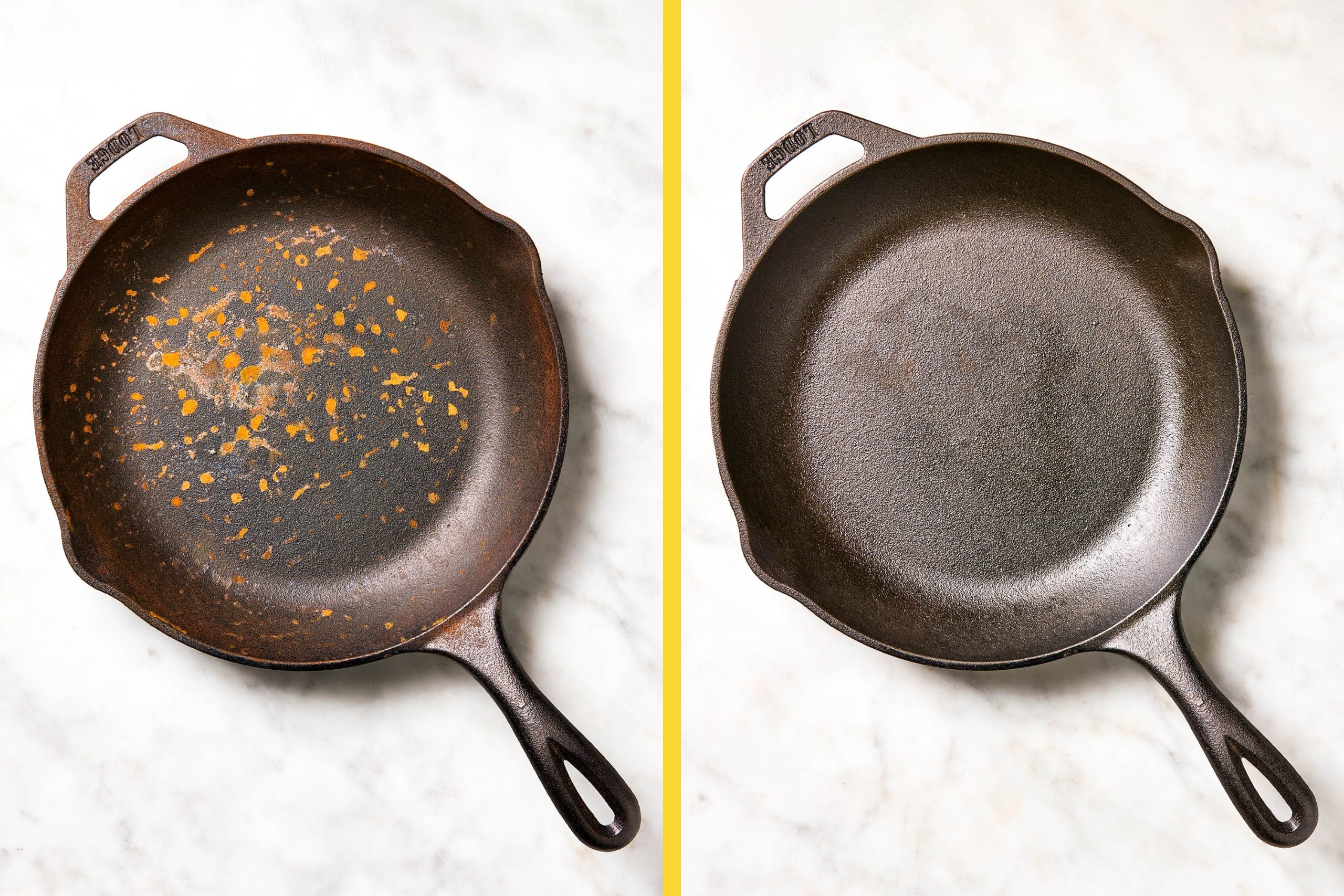
# Banish the Blight: A Comprehensive Guide to Restoring Your Cast Iron
Is your beloved cast iron skillet marred by unsightly rust? Fear not! This pervasive problem, while disheartening, is entirely reversible. With a little effort and the right approach, you can transform your rusty cookware back into a gleaming, non-stick workhorse. This guide will walk you through the most effective methods for rust removal, ensuring your cast iron’s longevity and your culinary enjoyment.
Rust on cast iron is a natural consequence of its porous nature and its interaction with moisture and air. However, neglecting its care can lead to a build-up that not only looks unappealing but can also affect the performance and safety of your cookware. Fortunately, the solutions are often simple and readily available in most households.
## Understanding the Enemy: What Causes Cast Iron Rust?
Before diving into the removal process, it’s helpful to understand why rust forms. Cast iron is primarily made of iron, which is highly susceptible to oxidation when exposed to moisture.
* **Moisture Exposure:** Inadequate drying after washing is a primary culprit. Even a small amount of lingering water can initiate the rusting process.
* **Abrasive Cleaning:** Using harsh detergents or scouring pads that strip away the seasoned layer can leave the bare iron exposed and vulnerable.
* **Improper Storage:** Storing cast iron in humid environments or with lids that trap moisture can accelerate rust formation.
## The Arsenal: Tools and Techniques for Rust Removal
There are several effective methods for tackling rust on your cast iron. The best approach often depends on the severity of the rust.
### Method 1: The Gentle Approach – Baking Soda and Vinegar
For light to moderate rust, a combination of baking soda and vinegar can work wonders.
1. **Create a Paste:** Mix baking soda with a small amount of water to form a thick paste.
2. **Apply and Scrub:** Spread the paste over the rusted areas and let it sit for a few hours. Then, use a stiff-bristled brush or a scouring pad to scrub away the rust.
3. **Vinegar Soak (Optional):** For more stubborn spots, you can create a 50/50 solution of white vinegar and water. Submerge the rusted area (or the entire pan if necessary) for about 30 minutes to an hour. **Do not leave it in for too long, as the acid can start to pit the iron.**
4. **Rinse and Dry Immediately:** Thoroughly rinse the pan with water and dry it completely with a towel.
### Method 2: The Heavy-Duty Solution – Steel Wool and Oil
For deeply ingrained rust, a more abrasive method is needed.
1. **Scrub Vigorously:** Use fine-grade steel wool (000 or 0000 grade is ideal) to scrub away all traces of rust. Apply firm pressure and work in circular motions.
2. **Clean and Dry:** Once the rust is gone, wash the pan with warm water and a mild dish soap (this is one of the few times soap is acceptable on cast iron). Rinse thoroughly and dry immediately and completely. A light heating on the stovetop can ensure all moisture is gone.
3. **Re-season:** This more aggressive method will strip away the pan’s seasoning. Therefore, immediate re-seasoning is crucial.
The lifespan of a well-maintained cast iron skillet can be measured in generations, often passed down as cherished heirlooms.
## The Crucial Step: Re-Seasoning Your Cast Iron
After removing rust, your cast iron will be bare and susceptible to immediate re-rusting. Re-seasoning is essential to create a protective, non-stick layer.
1. **Apply a Thin Layer of Oil:** Use a high smoke point oil like flaxseed, grapeseed, or canola oil. Apply a very thin layer to the entire surface of the pan, inside and out, using a paper towel. Wipe away any excess oil, as too much will result in a sticky, uneven finish.
2. **Bake:** Place the skillet upside down on the middle rack of your oven. Place a baking sheet or aluminum foil on the rack below to catch any drips.
3. **Heat:** Bake at a high temperature (around 450-500°F or 230-260°C) for one hour.
4. **Cool:** Turn off the oven and let the pan cool completely inside the oven.
5. **Repeat:** For the best results, repeat this seasoning process 2-3 times.
## Prevention is Key: Maintaining Your Cast Iron
The best way to deal with rust is to prevent it from forming in the first place.
* **Dry Thoroughly:** Always dry your cast iron immediately and completely after washing.
* **Season Regularly:** A quick re-seasoning after each use, or periodically, helps maintain the protective layer.
* **Avoid Soaking:** Never leave cast iron to soak in water.
* **Store Properly:** Store in a dry place, perhaps with a paper towel placed inside to absorb any residual moisture.
Cast iron cookware has been in use for centuries, with some of the earliest examples dating back to the Han Dynasty in China (206 BC – 220 AD).
## Frequently Asked Questions (FAQ)
**Q1: Can I use a wire brush to remove rust?**
A1: While a wire brush can remove rust, it can also be too aggressive and damage the surface of your cast iron, especially if it’s not heavily rusted. Fine steel wool (000 or 0000 grade) is generally a safer and more effective option for most situations.
**Q2: How often should I re-season my cast iron?**
A2: It’s recommended to re-season your cast iron pan after every deep cleaning or whenever you notice the seasoning is wearing thin. For everyday use, a light oiling after drying is often sufficient.
**Q3: Is it safe to cook with cast iron that has been rusted?**
A3: Once the rust is completely removed and the pan is properly re-seasoned, it is safe to cook with. However, cooking with rusted cast iron is not recommended as it can impart a metallic taste to food and the rust itself is not desirable.
**Q4: My cast iron is still sticking after seasoning. What did I do wrong?**
A4: Sticking issues often arise from insufficient seasoning, using too low a heat, or not using enough cooking fat. Ensure you have built up a good layer of seasoning and preheat your pan properly before adding food.
**Q5: Can I put my cast iron in the dishwasher?**
A5: Absolutely not. Dishwashers use harsh detergents and prolonged wet cycles that will strip the seasoning and cause rust. Hand washing is the only way to care for cast iron.
By following these steps and implementing good maintenance practices, you can ensure your cast iron cookware remains a reliable and cherished part of your kitchen for years to come, free from the blight of rust.
