# Releasing a Strap from a Ratchet: A Comprehensive Guide
Struggling to release a strap from a ratchet? You’re not alone. This common frustration can turn a simple task into a puzzling ordeal. Whether you’re securing cargo, tightening a load, or involved in any activity that utilizes ratchet straps, knowing the proper technique for releasing them is essential for efficiency and safety. This guide will demystify the process, providing clear, actionable steps to free your strap smoothly.
Before diving into the release mechanism, it’s helpful to understand the basic operation of a ratchet strap. These straps consist of a webbing strap, a ratchet mechanism, and a hook or anchor point. The ratchet is the key component, allowing you to incrementally tighten the strap by repeatedly pressing down on a lever. This lever engages a gear system that pulls the strap taut. Releasing the strap involves reversing this action, but the specifics can vary slightly depending on the ratchet’s design.
| Category | Information |
| :—————- | :———————————————————————————————————————————————————————————————————————————————————————————————————————————– |
| **Mechanism** | Ratchet straps work by using a toothed wheel (ratchet) and a pawl to incrementally tighten webbing. The lever on the ratchet engages the pawl, allowing it to catch on the teeth of the ratchet wheel as the lever is pumped, thereby pulling the strap tighter. |
| **Purpose** | Primarily used for securing and tightening loads during transportation, storage, or other applications where a secure hold is necessary. Common in trucking, moving, camping, and securing equipment. |
| **Key Components**| Webbing strap, ratchet mechanism (lever, pawl, toothed wheel), hook or end fitting. |
| **Release Action**| Involves disengaging the pawl from the ratchet wheel, allowing the strap to be loosened. |
| **Authentic Reference** | [Ratchet Tie-Down Strap Operation and Safety](https://www.uhs-hardware.com/blogs/news/ratchet-tie-down-strap-operation-and-safety) |
## Understanding the Ratchet Mechanism
Most ratchet mechanisms operate on a similar principle, though visual designs can differ. At its core, a ratchet features a lever that, when actuated, moves a pawl. This pawl is a small, often spring-loaded, piece that engages with the teeth of a gear or wheel. When tightening, the pawl allows the wheel to turn in one direction only, progressively shortening the strap. Releasing the strap requires you to disengage this pawl from the teeth.
### Common Ratchet Types and Release Methods
While the fundamental principle remains the same, different ratchet designs have slightly varied release mechanisms:
* **Lever-Actuated Release:** This is the most common type. It involves fully depressing the lever. In many designs, pressing the lever all the way down also moves the pawl out of engagement with the ratchet gear. You’ll usually hear or feel a distinct click as the pawl disengages.
* **Push-Button Release:** Some ratchets incorporate a button or a specific point on the lever that needs to be pushed or squeezed. This action is what disengages the pawl.
* **Cam-Lever Release:** Less common for standard tie-downs, these might be found on specialized equipment and involve a different lever action to release tension.
Strap tension is crucial. Releasing a strap under extreme tension can cause it to snap back unexpectedly, posing a significant safety hazard. Always ensure you are positioned safely and have a firm grip before attempting to release a tightened strap.
## Step-by-Step Release Process
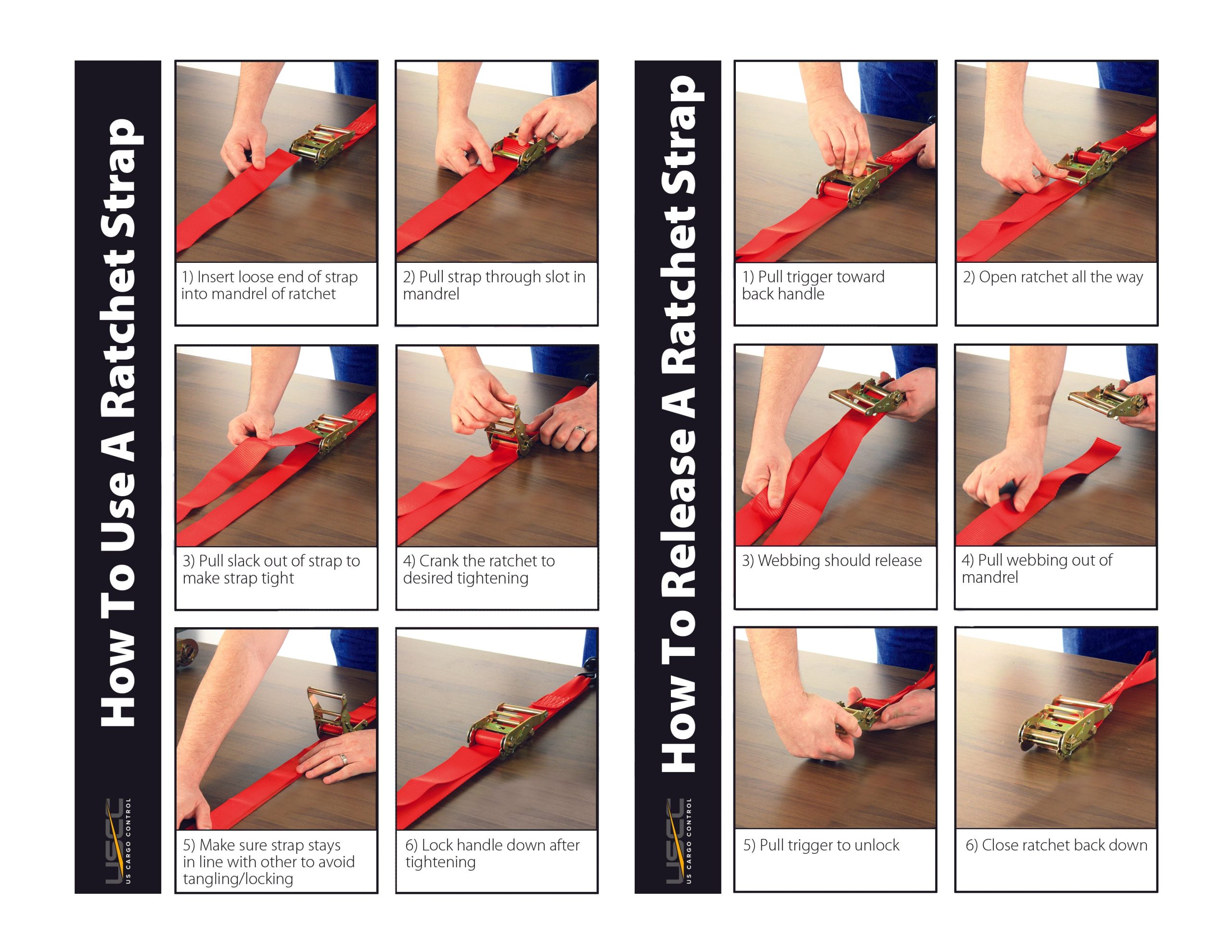
Regardless of the specific ratchet type, the general process for releasing a strap is as follows:
1. **Assess the Tension:** Before you do anything, evaluate how tight the strap is. If it’s under significant load, proceed with extra caution.
2. **Locate the Release Lever:** Identify the main lever on the ratchet mechanism.
3. **Engage the Release:**
* For most lever-actuated ratchets, push the lever *all the way down*. You may need to push it towards the spool where the strap is wound.
* If there’s a specific button, press or squeeze it firmly.
4. **Apply Downward Pressure:** While holding the release engaged, apply downward pressure on the lever. This is the action that usually disengages the pawl.
5. **Simultaneously Loosen the Strap:** As you hold the release engaged and press down, use your other hand to pull the loose end of the strap *away* from the ratchet mechanism. This will start to feed the strap back through.
6. **Repeat if Necessary:** If the strap only loosens a little, you may need to repeat the process. Sometimes, the ratchet might be “stuck” at a particular tooth. Fully engaging the release and pulling the strap again should free it.
7. **Full Release:** Continue pulling the strap until it is completely loose.
### Tips for Stubborn Ratchets
Sometimes, a ratchet can be difficult to release. Here are a few tips:
* **Jiggle the Lever:** Gently wiggle the release lever while trying to disengage it. This can sometimes help the pawl overcome sticky or misaligned teeth.
* **Slightly Increase Tension:** In rare cases, slightly increasing the tension by pumping the lever a very small amount before attempting the release can help. Be extremely careful with this method.
* **Clean and Lubricate:** If you frequently encounter sticky ratchets, dirt or corrosion might be the culprit. Cleaning the mechanism and applying a lubricant can greatly improve its performance.
## Safety Precautions
Working with ratchet straps demands attention to safety.
* **Never Stand Directly in Line with the Strap:** If the strap breaks or slips, it can whip back with considerable force.
* **Inspect Straps Regularly:** Before each use, check for any signs of wear, fraying, or damage to the webbing or the ratchet mechanism. Damaged straps should not be used.
* **Use Appropriately Rated Straps:** Ensure the strap’s working load limit (WLL) is sufficient for the weight you are securing.
The design of a ratchet mechanism relies on precise interlocking of metal parts. Dirt, debris, or wear can impede the function of the pawl, making it difficult to engage or disengage from the ratchet wheel. Regular maintenance can prevent such issues.
## Frequently Asked Questions (FAQ)
**Q1: Why is my ratchet strap so hard to release?**
A1: This is often due to dirt, debris, or wear within the ratchet mechanism, preventing the pawl from fully disengaging from the teeth. Sometimes, releasing a strap under extremely high tension can also make it more difficult.
**Q2: Can I force the release if it’s stuck?**
A2: It’s best to avoid excessive force, as this could damage the ratchet mechanism or cause injury. Try the recommended troubleshooting steps first, such as jiggling the lever or ensuring it’s fully depressed.
**Q3: How often should I clean and lubricate my ratchet straps?**
A3: For frequently used straps, cleaning and lubricating them every few months or after heavy use is recommended. For occasional use, inspect them before each use and clean/lubricate as needed.
**Q4: What is the difference between a ratchet strap and a cam buckle strap?**
A4: Ratchet straps use a toothed mechanism for high tension and secure locking, ideal for heavy loads. Cam buckle straps use a clamp-like mechanism that is quicker to operate but generally suitable for lighter loads where overtightening is not a concern.
**Q5: What does “working load limit” (WLL) mean?**
A5: The WLL is the maximum load that the strap is rated to safely carry. It’s crucial to select straps with a WLL that exceeds the weight of the item being secured to ensure safety.
